

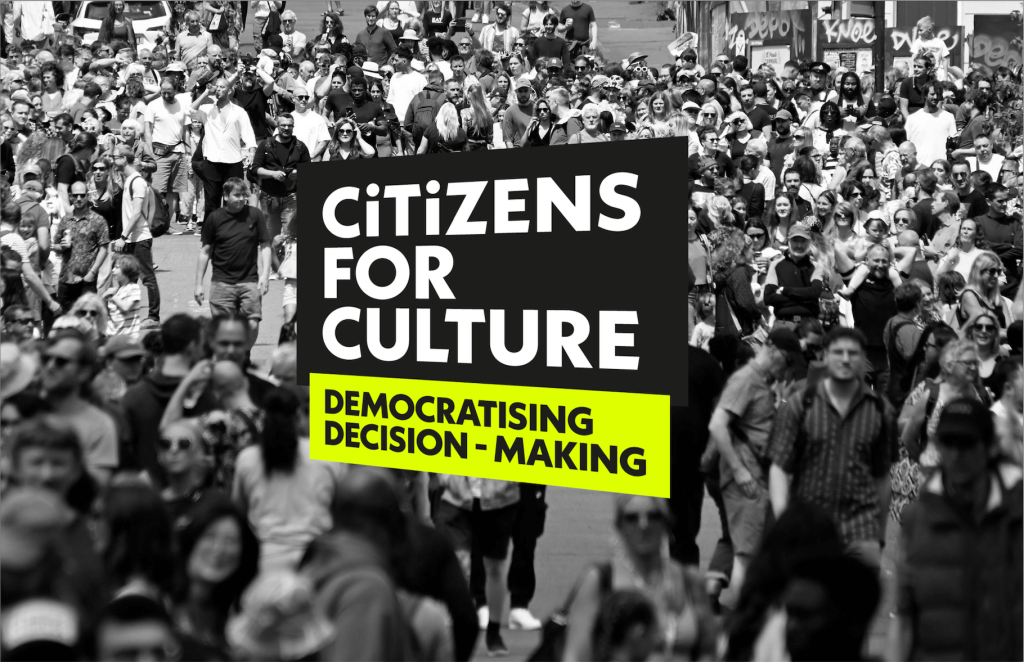
In 2025, Trinity Community Arts, St Pauls Carnival CIC, Citizens in Power and the West of England Mayoral Combined Authority will collaborate to launch a regional Citizens’ Assembly for Culture.

This bold new approach to cultural engagement will bring together citizens – people living, working or staying across the West or England – to explore how creative opportunities can be inclusive and accessible for everyone in the region.

Guided by the four pillars of the West of England’s existing cultural plan – skills, the economy, placemaking and well-being – the Assembly will create a series of recommendations that will help to define priorities for regional cultural output; what takes place and where, who is involved and how our regional offer is shaped and defined.

We are collaborating with WECIL who are providing expertise on the site’s features and accessibility. We know this is always a journey, so if you have any feedback about the site please do get in contact with us.


THE PROJECT SO FAR:

On Thursday, 15th January, from 5pm to 6pm, citizens from the recent Citizens’ Assembly will present their Cultural Plan to Helen Godwin, Mayor of the West of England, alongside representatives from Arts Council England, funders, and creative leaders. 

This is an event for everyone who has supported Citizens for Culture over the last three years and will take place in central Bristol. In the spirit of Citizens’ Assemblies, we are offering a number of invites to this special event to be selected by lottery from those who register their interest on this form here.

15,000 randomly selected households across the region received invitations to take part in a unique democratic process. Hundreds of people put themselves forward for the Citizens’ Assembly, providing background information about themselves, and from those 52 people were selected, from all walks of life, to reflect the population of the West of England.

Together, they are now meeting as a Citizens’ Assembly for the West of England to answer the question: “What would culture and creativity look like in the West of England if they were for everyone?” Their discussions will help shape a Cultural Plan to be unveiled in early December 2025. This community-led plan will reflect the hopes, values, and creative vision of the region’s residents, serving as a model for citizen-led cultural policymaking across the UK.

The partnership secured further funding from the Calouste Gulbenkian Foundation (UK Branch) and the Paul Hamlyn Foundation for the delivery of Citizens for Culture.  Citizens for Culture was announced as part of the delivery plans for West of England Mayoral Combined Authority’s Culture West programme.

The West of England Mayoral Combined Authority agreed to join the partnership and support the research phase. One of the objectives of this phase was to create a series of citizens’ panels with representative groups of citizens from across the region selected by the Sortition Foundation. These citizen panels created the design principles for the Citizens’ Assembly for Culture.

£10,000 of research and development funding was secured from the Calouste Gulbenkian Foundation (UK Branch) which enabled the partners to begin the initial research phase. During this period, collaborators from the cultural sector helped explore how a Citizens’ Assembly for Culture could be used to co-create a cultural delivery plan During this phase, it was recommended that the plan should incorporate the wider region.

The project was initiated by St Pauls Carnival CEO, LaToyah McAllister-Jones, and Trinity‘s CEO, Emma Harvey, who, as community leaders, began to think about how people in Bristol – particularly those from under-represented groups – could help to inform cultural plans for the city. The pair began working with David Jubb from Citizens in Power to build democracy into cultural decision-making. programme.

Sign up to our newsletter to stay up to date with upcoming events.

Sign up for newsletter

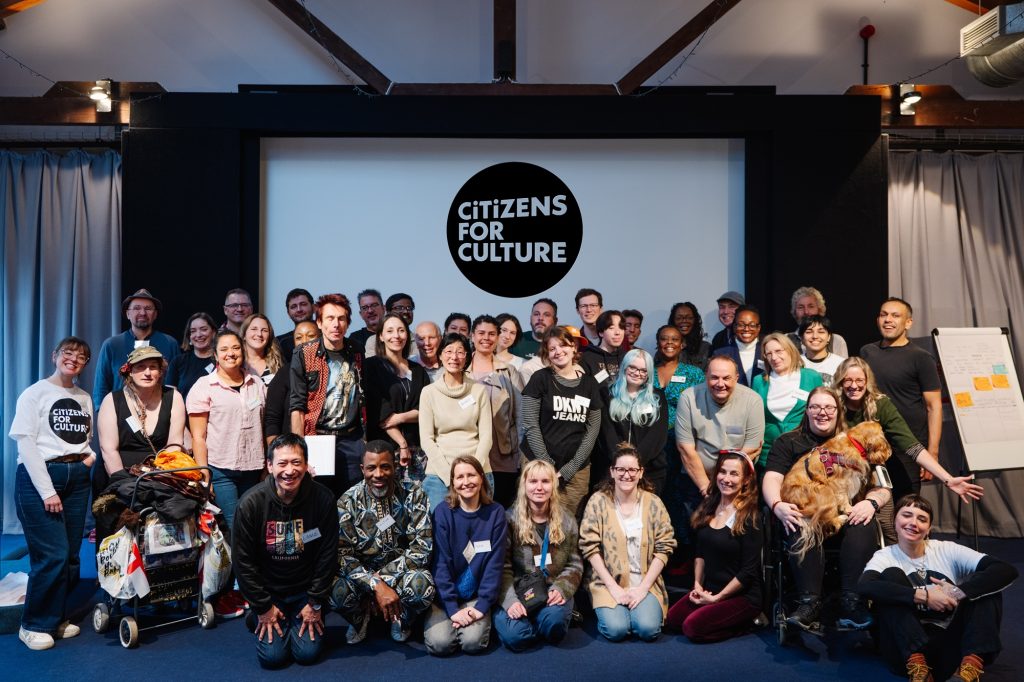
Yesterday marked an important moment for creativity and culture in the West of England, when citizens shared their ideas for a new citizen-led plan for the region. 141 people from across the region, from citizens to artists, local authority representatives to organisational leaders. All came together to mark the launch of the Cultural Plan.

Last year, 51 citizens, selected by civic lottery to reflect the diversity of the West of England, spent months learning, deliberating and working together to answer a simple but ambitious question: what would culture and creativity in the West of England look like if they were for everyone?

At the event, citizens shared their experiences and set out what matters most to them, sharing a plan that covers Bath & North East Somerset, Bristol, North Somerset and South Gloucestershire.

Helen Godwin, Mayor of the West of England, celebrated the achievement of the citizens’ plan, as did Sophie Moysey from Arts Council England and representatives of the creative and cultural sector. There was a shared commitment to work with citizens to turn the plan into action.

Citizens for Culture is the first time a Citizens’ Assembly has been used in the UK to shape a regional cultural plan. Secretary for State, Lisa Nandy called it “a shining example of how we can put communities at the heart of cultural decisions that impact them”. 

Designed by citizens from the West of England, the Assembly used consensus-based decision-making rather than adversarial debate, with citizens and organisations learning together, questioning evidence and building shared understanding.

Yesterday’s launch was the beginning of the next chapter. Citizens will form a panel to work alongside regional stakeholders. A primary task will be to decide which of their priorities to take forward first, using an investment of £100,000 from Esmée Fairburn.

Over the coming months, citizens, sector partners, local authorities and funders, will meet to explore where work is already happening, where it can grow, and where new collaboration is needed to make culture and creativity genuinely accessible to everyone.

Link to plan

Link to press release

Join the conversation using #CitizensForCulture.

The UK’s first Citizens’ Assembly dedicated to shaping a regional plan for culture and creativity has today published its report in the West of England, at an event with the Mayor and council leaders, Arts Council England, funders, and creative leaders.

More than half of the Assembly members wanted to continue their involvement over the coming three years, so the Citizens’ Assembly will now become a Citizens for Culture panel. The panel is uniquely empowered with £100,000 of funding from the Esmée Fairbairn Foundation to pilot early ideas and test new approaches. Some 100 cultural organisations and stakeholders from across the region have already committed to working together to enhance and open up the West’s world-renowned creativity.

In their Cultural Plan – www.citizensforculture.info/report – the citizens set out a vision for “a West of England where culture is for everyone as part of everyday life, where everyone can take part, be heard, and feel proud of where they live.” They considered not just how people could be including in existing cultural structures, but whether those structures need to change. Their recommendations include working to: 


  • Open up parks, libraries, schools, heritage buildings, and unused spaces to gather and create, repurposing unused sites as shared creative resource hubs
  • Create an easy-to-use local and regional directory showing what’s on, where, and how to join in
  • Set up smaller local cultural assemblies to help guide future funding and decisions, with rotating memberships and publish details about cultural funding, involving local people in decisions, and working with underrepresented groups
  • Embed creative learning into school life and link with local arts providers
  • Develop creative solutions for more affordable and accessible transport options, trialled by selected venues with transport providers


Maria, a member of the Citizens’ Assembly, said:

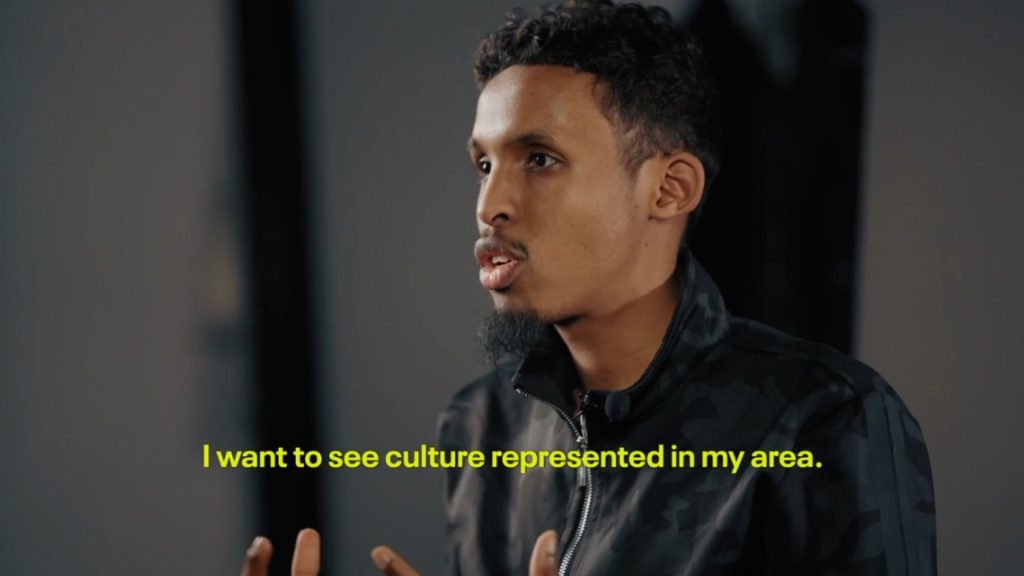
“I gained so much from being part of the Assembly. The workshops were really well run, and as an artist I enjoyed the different ways the facilitators led them, which made the process engaging and creative. Everyone’s opinion was heard and valued, and it made you feel that you truly belonged. I gained confidence to speak and engage with different people. I am taking away valuable skills and confidence, and I realised that after taking part I didn’t have to be an expert, as contributing came naturally. My hope now is to see how the plan develops in the future and how what we have planned comes to life.”

Gareth, a member of the Citizens’ Assembly, said:

“I found the Citizens Assembly and enlightening experience. Not only did it make me more aware of the cultural activities in the area and the challenges facing them, but it made me more aware of their value. Before the assembly I would have considered such activities as “nice to have”, now I see them as vital to our communities to bring people together and raise understanding.”

Project Partners Emma Harvey, LaToyah McAllister-Jones, and David Jubb said:

“Citizens for Culture exists because too many decisions about culture are made without the people they affect. This Assembly showed that when citizens are given time, support and real responsibility, they make thoughtful, ambitious and practical choices. Their Cultural Plan isn’t a wish list, it’s a shared direction for the region, shaped by people who live here and care deeply about our region’s future. What happens next depends on all of us choosing to work differently, together.”

Dame Caroline Mason, CEO of the Esmée Fairbairn Foundation, said:

“Citizens for Culture shifts power to local people – giving them direct control over investment into culture where they live. We’re excited and proud to be supporting the realisation of this citizen-led plan and its potential to influence change across the UK.”

Helen Godwin, Mayor of the West of England, said:

“Whether it’s Weston reaching the third round of the FA Cup, Aardman winning an Oscar, Bath’s ever-growing tourism offer, or Rivals winning an Emmy, the West’s culture is unmatched. With more investment on the way, the best is yet to come. I’m thrilled that the Citizens’ Assembly will continue as the Citizens for Culture panel, with funding to pilot their ideas. This report is an important moment, with recommendations ranging from parks to schools to transport. We know how important it is to open up our region for everyone to have chance to enjoy, as Kids Go Free proved over the summer and Christmas school holidays. I’m looking forward to working with the citizens, our wider communities, creative sector, and councils to make culture more accessible for all.”

This year, the West of England becomes one of just six regions to access £25 million of devolved funding through the Government’s Creative Places Growth Fund. The creative industries are a key part of the Growth Strategy for the coming decade, which aims to create 72,000 new jobs here in the country’s fastest growing region (+3%, 2023). Since 2015, almost 18,500 jobs were created in the sector in the West – the most of any English region, including London.


Culture Secretary, Lisa Nandy said: 

“This Citizens for Culture panel is a shining example of how we can put communities at the heart of cultural decisions that impact them. The people of the West of England have created a bold vision for culture that truly belongs to everyone.”

“Our ambition is that every corner of this country will flourish as part of the UK’s position as a creative superpower, maximising the value and impact of our content, services, products and skills. We are supporting the West of England and 5 other priority places with a £25 million investment each from the Creative Places Growth Fund.”

Phil Gibby, Area Director for the South West at Arts Council England, said:

“The learning from the Citizens’ Assembly is essential reading for everyone with an interest in arts and culture in the West of England. It’s encouraging to know that the journey will continue, and we look forward to engaging with the conversations that lie ahead.”

Over 15,000 randomly selected households from across the West were invited to take part in a unique people-powered process; a two-stage civic lottery designed and delivered by the Sortition Foundation chose 51 citizens who together reflected the region’s diversity to answer the question: “What would culture and creativity look like in the West of England if they were for everyone?” The Assembly was designed to include people to respond to this question who are often excluded from cultural decision-making, so that citizens, not institutions, can shape priorities and remain involved in decisions about what happens next.

From September to November 2025, 51 citizens from all walks of life took part in eight days of briefings and workshops with stakeholders and experts from across the region and beyond. In all four local authority areas that make up the West, citizens identified consistent long-term priorities including equity of access, transparent funding, sustainable capacity, strong governance, and culture’s wider social and economic role. Citizens from each area wrote vision statements for their part of the region, alongside a regional action plan.

Citizens for Culture – a partnership between Trinity Community Arts, Involve Associate LaToyah McAllister-Jones, Citizens in Power, and the West of England Mayoral Combined Authority – is backed by Bath and North East Somerset Council, Bristol City Council, North Somerset Council, and South Gloucestershire Council. Citizens for Culture is also supported by Arts Council England, the Calouste Gulbenkian Foundation, Esmée Fairbairn Foundation, and Paul Hamlyn Foundation.

Monday 10 November

On Sunday 9 November, the West of England Citizens’ Assembly met in person for its final session.

Over the past two months, 52 citizens from across Bath and North East Somerset, Bristol, North Somerset and South Gloucestershire have been meeting to answer the question:

What would culture and creativity look like in the West of England if they were for everyone?

This final meeting brought together all the ideas, discussions and evidence from previous sessions. Citizens arrived on Sunday having voted for their area and region-wide priorities developed in October and set about turning these into practical actions for a new region-wide Cultural Delivery Plan.

The day opened with a welcome and a chance for members of the Assembly to explore a gallery of materials from previous sessions, including citizens’ own notes, extracts from presentations as well as “snapshot” evidence. 

The morning focused on an exploration of power. There were discussions about how change happens and who holds the power to make it happen. Citizens returned to the idea of different “Actors” or stakeholders who have different roles and relationships in the creative and cultural sector, including councils, funders, cultural organisations, communities, and creative practitioners. There were a wide range of discussions about who has power, where influence sits and how it might be shared more fairly. 

The Assembly observed a two-minute silence at 11am as part of Remembrance Day. 

Assembly members then reviewed insights gathered in earlier sessions before working in small groups to draft short, medium and long-term actions under their selected priorities. These covered themes such as Wellbeing, Placemaking, Skills, and Economy, building on the previous eight days of discussion about how culture can support fairer opportunities and grow stronger communities.

In the afternoon, citizens refined their ideas through a process of review and feedback, ensuring that every action was realistic and responded to the Assembly question. The day closed with all groups sharing their final action plans, followed by warm applause and thanks for the collective effort that had brought the Assembly to an exciting conclusion.

One of the next steps will be for a Citizen Oversight Panel to be established from the Citizens’ Assembly to oversee the implementation of the Assembly’s action plan and ensure the principles of citizen-led decision-making continue beyond the Assembly.

Over the coming weeks, the Assembly organisers will be in touch with all the individuals and organisations who have signed up to support the Citizens’ Assembly and its next steps with the outcomes of the Assembly to be shared at an event on Thursday 11 December, in which citizens from the Assembly will share their ideas with the Mayor and the wider cultural sector.

If you are someone who works in or around the cultural sector, there is still time to get involved and support the Citizens’ Assembly and the Cultural Delivery Plan created by citizens — to find out more or register your interest, please email david@citizensinpower.com